
Why Cook In The Kitchen When They Can Cook In Lord’s?
- Swastika Kar

- 55 minutes ago
- 4 min read
Looks like the internet's favourite selectors have gone unusually quiet. Funny what a scoreboard can do. There is something almost adorable about the internet's confidence when the Indian women's cricket team loses. The experts emerge like clockwork, and the comment sections become selection committees, and suddenly, everyone has a PhD in cricket, leadership and apparently, womanhood. Every uncle with a smartphone becomes a selector, every anonymous account becomes a cricket analyst, and every comment section transforms into a courtroom where the verdict is always the same: "they belong in the kitchen" or "shut women's cricket down" or "retire them all."
After India's disappointing T20 World Cup campaign, the criticism directed at captain Harmanpreet Kaur was never just about cricket. Losing a tournament somehow became grounds to question her entire career. Calls for her retirement flooded social media, her captaincy was publicly debated, and journalists directly asked her whether it was finally time for her to step aside; and if all that wasn't enough, the internet found another favourite sport, that is, counting her age. Apparently, leading India to multiple historic victories across the world and winning a Padma Shri earns you exactly one bad tournament before strangers decide you've expired.

We don't seem to conduct retirement ceremonies for male captains after every disappointing campaign. They get "backing", but women get deadlines. But scoreboards don't lie. They have a terrible habit of ruining good misogyny. That brings us to Lord's. It is not just another cricket ground. It is the Home of Cricket. A place where history isn't merely remembered but is displayed on walls, etched onto honours boards, and woven into the mythology of the sport itself. For generations, every cricketer has dreamt of walking through the Long Room wearing Test whites, knowing that if they did something extraordinary, Lord's would remember their name long after the crowd had gone home.
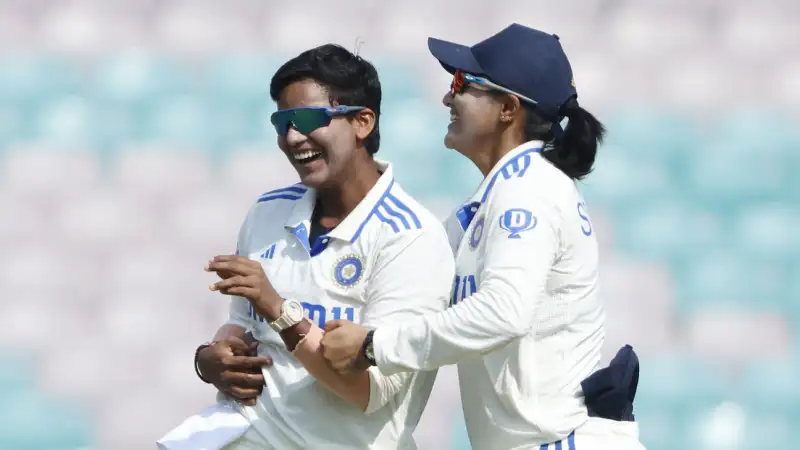
And remember, this happened because India walked into England's backyard and left with history in their kit bags. The visitors defeated England by a commanding margin, producing one of the most significant victories in Indian women's Test cricket. Kranti Gaud announced herself to the cricketing world with a stunning five-wicket haul that earned her a place on the Lord's Honours Board, while Yastika Bhatia scripted history with a magnificent century, becoming the first woman to score a Test hundred at the iconic venue. The same internet that had recently suggested retirement suddenly seemed remarkably busy finding nicer things to do.
Almost as if winning had interrupted the trolling schedule. Yet while the players were busy making history, another story quietly unfolded, one that never quite made the highlight reels.
For a cricketer, receiving a Test cap means one of the proudest moments of their lives. Long before sponsorship logos and franchise leagues, the Test cap symbolised something much bigger than a piece of clothing. It marked your arrival into cricket's oldest and most respected format. It was a symbol of belonging and a legacy. A physical reminder that you had earned your place in the game's history. From Australia's famous Baggy Green to England's traditional caps, these ceremonies have become sacred rituals in world cricket. Which is precisely why fans were disappointed upon realising that even as they played one of the most iconic Test matches, the Indian women's team were not accorded the same ceremonial significance that has long accompanied Test debuts; they were deprived of the Test cap honours. It may seem like a small detail to those who think cricket begins and ends with the scoreboard, but symbols and traditions matter. Respect often reveals itself in the smallest gestures. If history deserves celebration, then so do the women creating it.

BCCI, the world's richest cricket board, somehow keeps finding ways to make women's milestones feel unceremonious. In a related note, where exactly was the fanfare?
Where were the cinematic promotional videos, countdowns, wall-to-wall advertisements reminding us that something historic was about to unfold? Had this been a men's Test at Lord's, our social media feeds would have looked like a festival. Instead, many fans only realised the significance of the tour well after history was already scripted. Apparently, even history needs better marketing when women are writing it.
Women's cricket, and sports in general, continues to operate under the most exhausting terms and conditions imaginable. You don't get attention for showing up, being consistently good or for representing your country. First, you must create history. Then maybe people will watch. Then maybe they'll applaud. And if you're lucky, they'll remember your name until next week's hashtag trends. It's an impossible bargain, and somehow these women keep honouring it.
What is perhaps most fascinating, however, is the breathtaking inconsistency of Indian cricket fandom. Our fans are ruthless with everyone. When the men's team loses, outrage finds its way to the nearest woman; just ask Anushka Sharma, who has repeatedly been blamed for Virat Kohli's form, or the couple's infant daughter, who became the target of vile online abuse. But when the women's team loses, the easiest targets are already on the field. Their performance is dissected, yes, but so are their gender, age, appearance and right to represent the country. One defeat becomes less about cricket and more about whether women should have been playing the game at all. That is the difference. Indian cricket fandom can be unforgiving to everyone, but its misogyny reveals itself most clearly when women are the ones holding the bat.
No wonder women’s victories like Lord's feel bigger than cricket. They are victories over memory, prejudice and every lazy joke about kitchens and retirement that resurfaces whenever women show any signs of being human. The funniest part of this entire story isn't that India made history. It's that the same people who confidently prescribed aprons a few months ago are now riding the wave of celebration.
Perhaps they finally realised that cook indeed, they can — Indian women cricketers cooked, ate, and left no crumbs, walking towards a historic victory at Lord's!
xoxo,
💋Gossip Gal💋



Comments